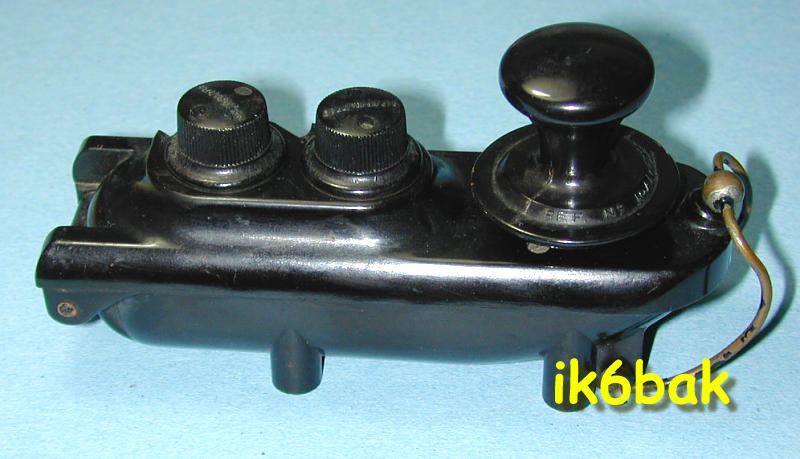
Manufactured from 1936 by Northern Electric - Ottawa
called 'bathtub' for its shape
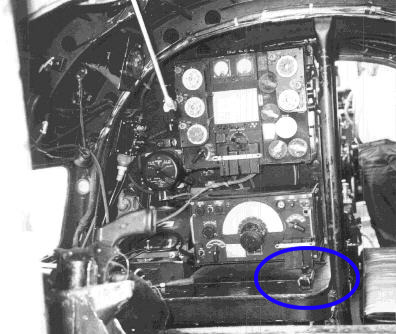
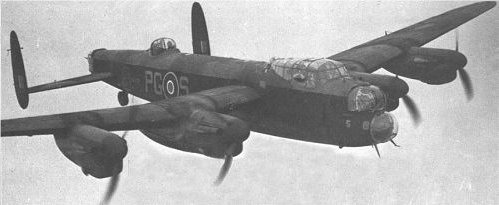
This key was standard issue in most RAF aircraft both pre and post war, being associated with the R1082 / T1083 TX / RX combination, which developed into the famous R1155 / T1154 double act. All the heavy bombers, Lancaster, Halifax and Wellington aircraft were equipped with this combination of TX / RX and Bathtub key. It has several interesting features: The base of the knob is shrouded in a leather diaphragm and together with the totally enclosed Bakelite case, prevented the key from igniting inflammatory mixtures of fuel vapour and oxygen. Conversely, it is relatively fireproof if the worst happened to the aircraft. The case was also designed to be weatherproof for use in open-cockpit planes and later in rescue launches. The heavy Bakelite case also protected the operator from the 1kV across the key terminals ! An unusual feature of the key was a spring clip at the front of the case, which could be flicked forward to hold down the knob and send a continuous carrier. This was used not only in tune-up, but if the aircraft was in trouble, the crew could bale out leaving the carrier on, to enable the DF stations to get a fix on their position. From the amateur radio point of view, there are very few who enthuse about the key's heavy action. This is due to the use of a spring-loaded V notch instead of the normal bearings, designed so that the key could take a pounding, from the gloved fist of the wireless operator who was himself being tossed about by turbulence and often ground fire. The keys were also used in Air Sea Rescue launches, where heavy seas, gave the same problems of stability as in the aircraft. The type F key was made in Mill Hill, London and there were versions made for use in the Canadian RAF which were black in colour.